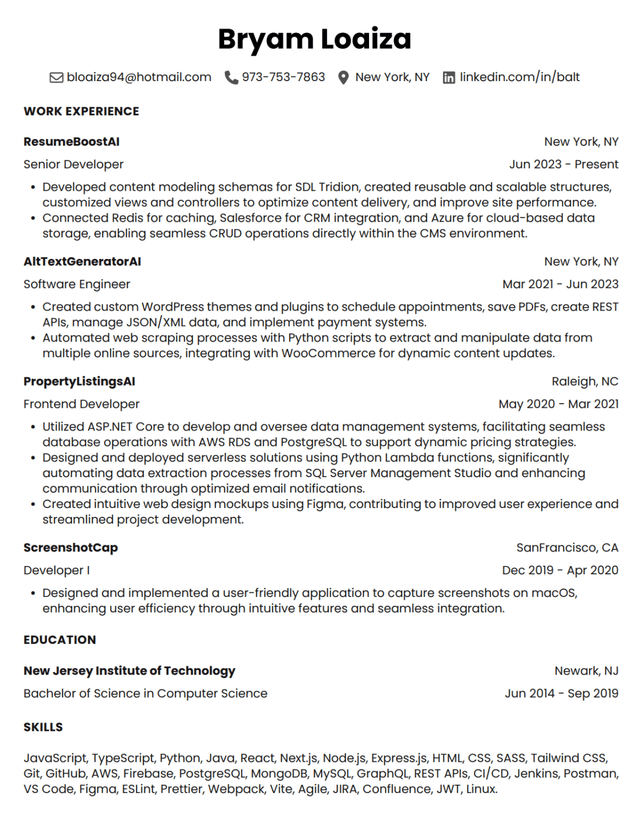
Biodata Format
Despite the increasing prevalence of Westernized CVs and resumes, biodata is still used in both job applications and marriage proposals in South Asia. Outside that region, no countries use a biodata format (although some countries in East Asia or Africa use CVs containing a lot of information similar to that found in biodata).
What is Biodata Format?
Biodata is short for biographical data, this document provides an overview of your personal background by highlighting personal details like family, education, and traits.
Biodata vs. Resume vs. CV
Much like a resume or CV, biodata also showcases your professional qualifications and experience. But, it focuses more on highlighting your personal information such as family background and physical characteristics.
Biodata: Less emphasis on professional experience, more on personal background, including details on family background and physical characteristics. Mostly used for marriage proposals and less commonly used for job applications. A popular application format in South Asian countries.
Resume vs. CV
Resume: An organized and professional document that outlines your professional experience, skills, and education in 1–2 pages. Tailored to specific job descriptions, highlighting achievements and qualifications that are relevant to the company's requirements. The standard job application format in the US.
CV: A detailed and professional document that outlines your career history, education, and skills in 1–2 pages, but sometimes three pages for academic and research job applications. Typically used for academic, research, or international job applications. The standard job application format in the UK and most European countries.
Standard Biodata Format Example
A well-structured biodata follows a logical and organized format, making key details such as your educational qualifications stand out. It includes a targeted profile summary that concisely highlights relevant professional strengths, industry experience, and areas of expertise.
The format showcases quantifiable achievements with tangible impact in previous roles to emphasize the candidate's skills. It provides a clear academic background and balanced skills presentation, showcasing a broader picture of the candidate's capabilities.
How to Create a Standard Biodata
Here are the essential steps to create a biodata for a professional job application: Start with your personal background information, add a professional photo (optional), create a succinct profile that summarizes your employment background or objectives, list your educational qualifications, showcase your professional work experience, make a list of key competencies in a skills section, create an additional section (optional), make a formal declaration, and stick to formal formatting.
Personal details to include: Full name, job title or position, phone number, email address, location (address and city), date of birth, gender, nationality, religion, marital status, father's name, mother's name, place of birth, languages, and LinkedIn profile or portfolio website.
Professional Photo Guidelines
Including a professional headshot isn't always required in every region or organization, but if applicable, it can help your application stand out. Your biodata photo should be formal and professional—avoid casual or personal images, like a beach photo or one with a drink in hand. Instead, choose a photo that reflects a corporate demeanor—wear formal clothes and stand against a neutral or plain background.
Education Section
In the education section of your biodata, list your academic achievements and qualifications. Start with your highest level of education. State the degree title, followed by the name of the institution where you earned your degree, and then enter the location by city or state. Additional details that you can share include awards, honors, and distinctions, relevant coursework or minors, significant roles you held in extracurricular activities, and grades (if above 80%).
Work Experience Section
Use a work experience section to outline your employment history. When describing a previous role, include job title, name of company, location (city, country), and employment dates. Similar to a reverse chronological resume, start by listing your most recent or current role and work your way backward. Focus on relevant experience that proves you're capable of carrying out the job requirements.
Skills and Additional Sections
List your core skills that are most relevant to the job in a skills section. If you have a range of skills to list, you can create categories in the skills section. This can include both technical skills and soft skills. Additionally, be specific and use keywords from the organization's job description. You can add additional sections such as certifications, projects, training, awards, and publications if relevant to your profession.
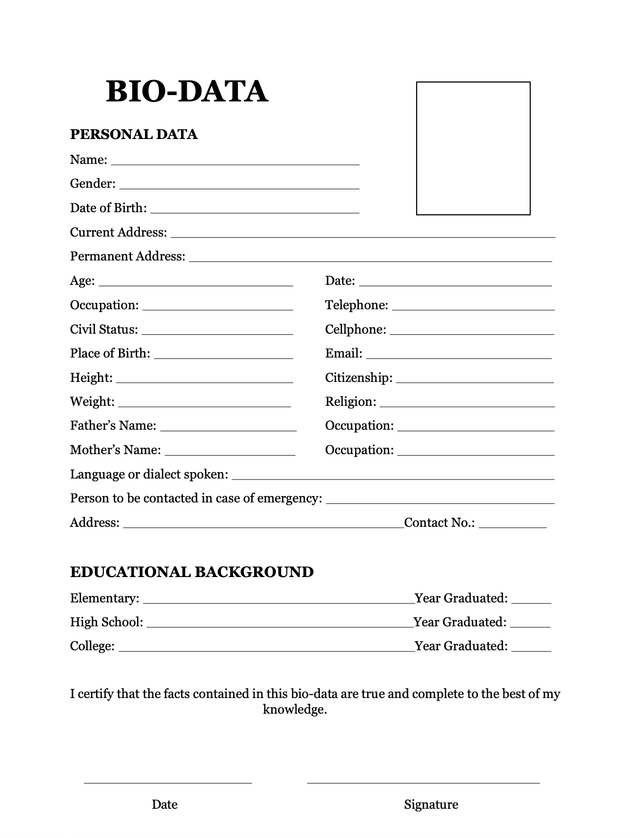
Bio-data Template Example
Download a real bio-data template example to see what a professional bio-data format looks like. Use it as inspiration for your own bio-data!
Ready to Create Your Perfect Resume?
Use our AI-powered builder to craft a resume that gets you hired faster!
Create Your AI Resume Now